Written by Adaobi Lisa Olisa
This year, I’ve had the opportunity to contribute to several global agenda-setting conversations on HIV prevention. While these spaces have been inspiring, they have also been deeply heartbreaking.
Again and again, I’ve heard global, regional and national actors question the need for HIV vaccine research because we now have long-acting HIV prevention options like injectable Pre-Exposure Prophylaxis (PrEP) including Lenacapavir which is taken every six months.
As someone who is deeply passionate about HIV prevention, health equity, and meaningful community engagement, I could not ignore those conversations.
And so, in commemoration of HIV Vaccine Awareness Day 2026, I’m fulfilling a promise I made to the community through my IAS OneVoice Campaign, “Level Up: Unlocking the Basics of HIV Vaccine Research for Young Changemakers” to simplify the science, break down the policy conversations, and share accessible resources to help young people understand what is happening in the HIV vaccine space and why it matters.
Because here’s the truth: Long-acting PrEP and HIV vaccines are not competitors. We need both.
The Big Question: “Why Invest in HIV Vaccines if We Already Have Long-Acting PrEP?”
This is a major question in HIV prevention right now. Today, we have an exciting mix of biomedical HIV prevention tools including Oral PrEP (pills taken daily), CAB-LA (injections taken every 2 months), Lenacapavir (Injections taken every 6 months), Dapivirine Vaginal Ring (used monthly) and more exciting options coming in the pipeline like MK-8527 (a monthly oral pill) currently in Phase 3 clinical trials.
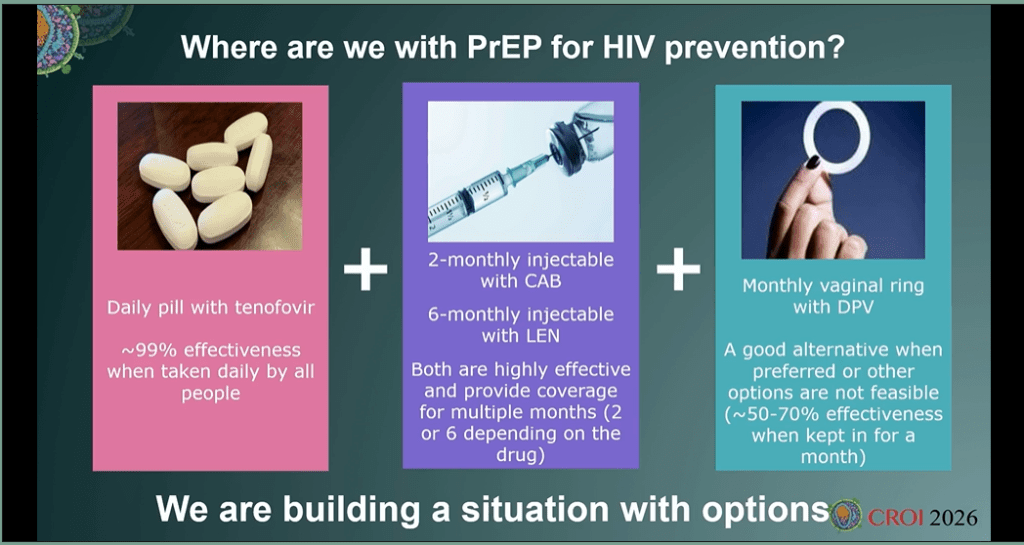
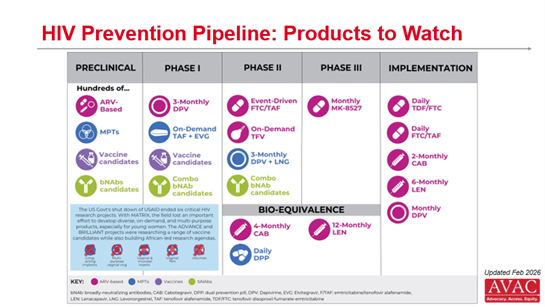
These innovations are changing the game. They reduce pill burden, support adherence, and offer people more prevention choices. So naturally, some people are asking: “If long-acting PrEP works so well, why continue investing in HIV vaccine research?”
According to a powerful viewpoint on Sustaining HIV Vaccine R&D in Africa in the Era of Long-Acting HIV Prevention by Roger Tatoud , this is actually the wrong question.
The real question is: What combination of HIV prevention tools will be the most effective, equitable, affordable, and sustainable for different communities and contexts?
That shift in thinking is important.
HIV prevention should never be “vaccines versus PrEP.” It should be about building a prevention portfolio with multiple options because people’s lives, realities, preferences, and access needs are different.
Why HIV Vaccines Still Matter
An HIV vaccine could still become one of the most powerful tools for ending the epidemic.
Why? Because vaccines have the potential to:
- Provide long-term protection
- Reduce the burden of daily or regular adherence
- Reach populations with limited access to healthcare
- Reduce stigma associated with taking HIV prevention medication
- Strengthen pandemic preparedness and vaccine science overall
Beyond Health: The Economic Case for HIV Vaccine R&D
The case for continued investment in HIV vaccine research is not only scientific or moral, it is also economic and strategic.
As highlighted by Nina Russell of the Gates Foundation during the AVAC Podcast for HIV Vaccine Awareness Day: “The science that’s been coming out of the HIV vaccine field has been driving innovation across sectors in global health.” We saw this during COVID-19, where decades of HIV vaccine research helped shape scientific innovation, vaccine platforms, and global collaboration.
This is a reminder that investment in HIV vaccine R&D does not stay within one disease area; it strengthens the broader engine of biomedical innovation.
From a development perspective, this aligns strongly with the African Union’s Agenda 2063 vision, which positions health as a foundation for sustainable development and economic transformation. Investing in vaccine research is therefore not a cost, it is a long-term economic strategy.
Every dollar invested in vaccine R&D generates long-term savings by reducing the costs of future outbreaks and healthcare expenditure.
Julieta Firmat & Asli Heitzer, International AIDS Society, Global HIV Vaccine Enterprise
Financing vaccine R&D is a smart investment in economic resilience, workforce productivity, and industrial development.
Investing in domestic vaccine R&D strengthens Africa’s health security and sovereignty, reducing reliance on external suppliers during pandemics.
Vaccine R&D is not just a health issue it is a strategic driver of national security, economic growth, and self-reliance.
But We Also Need to Be Honest About Reality
This conversation is not simple. The HIV prevention landscape has changed dramatically. Funding cuts are affecting research globally, countries are facing economic pressures, governments are balancing competing health priorities and long-acting PrEP is becoming increasingly effective and popular. This means HIV vaccine research cannot continue with “business as usual.”
According to Roger Tatoud’s viewpoint, HIV vaccine research must now:
- Demonstrate comparative public health value
- Be integrated into broader health systems
- Reflect African priorities and realities
- Move beyond donor dependency
- Include stronger African leadership and decision-making
That last point matters deeply. Africa carries a significant burden of the HIV epidemic, yet too often, African voices are excluded from setting research agendas and funding priorities. True transformation is not just about conducting trials in Africa. It is about building the capacity of African institutions, scientists, communities, and young people to help define:
- what gets funded,
- what gets prioritized,
- and what success looks like.
HIV Vaccine Research Is Bigger Than One Vaccine
One of the most powerful messages from Roger’s viewpoint was this:
HIV vaccine research is not only about finding a vaccine. It is also about building:
- clinical trial infrastructure,
- laboratory systems,
- regulatory capacity,
- manufacturing readiness,
- data systems,
- and scientific leadership.
These investments strengthen entire health systems and can support responses to future epidemics and other diseases.
So when we invest in HIV vaccine research, we are also investing in:
- African scientific leadership
- health security
- innovation ecosystems
- workforce development
- and long-term resilience
Why Young People Must Pay Attention
Young people cannot afford to be absent from these conversations.
The decisions being made today about HIV prevention funding, vaccine research, and access will shape the future of our generation.
Yet many young people are absent because scientific conversations are often filled with technical jargon and inaccessible policy language.
That is exactly why we must pay attention.
We deserve to:
- understand the science,
- engage in policy conversations,
- question decisions,
- advocate for equity,
- and help shape the future of HIV prevention.
Not as passive beneficiaries. But as informed co-creators.
Key Messages for Young Changemakers
- HIV vaccines and long-acting PrEP are complementary, not competing tools.
- HIV prevention should focus on choice, equity, and what works best in different contexts.
- Africa must move from participation to leadership in HIV vaccine research and agenda-setting.
- Investing in HIV vaccine R&D also strengthens broader health systems and scientific infrastructure.
- Young people and affected communities must have a formal seat at decision-making tables.
- Simplifying the science and highlighting key messages is essential for meaningful youth community engagement and accountability.
Resources to Explore
- Read Roger Tatoud’s Full Viewpoint: Sustaining HIV Vaccine R&D in Africa in the Era of Long-Acting HIV Prevention
- Checkout these resources from AVAC: AVAC HIV Vaccine Awareness Day Resources
- Read this New JIAS viewpoint for HIV Vaccine Awareness Day
Final Thoughts
An HIV vaccine may still take time. But abandoning HIV vaccine research because we finally have more long-acting prevention options would be shortsighted.
Progress in HIV prevention has never come from choosing one tool over another. It has come from expanding choice, advancing science, and refusing to leave communities behind.
As young changemakers, our role is not just to consume information. It is to understand it, question it, translate it, and use it to advocate for a healthier, more equitable future.
Together, we are not just the future.
We are the force.


 Beacon of Hope for Young Voices 🦋
Leave a comment